Those who recall the first, blocky online slots knows how many themes have faded away legacy-of-dead.eu. Egyptian adventures, though, have a special grip. The first time I loaded Legacy of Dead, I knew this was unique. Play’n GO, a developer with a reputation for skill and creativity, created this slot to raise the bar. Its journey from an idea to a fixture in UK casinos demonstrates how a game can polish a popular style while adding something new. This article traces its full timeline. We will explore the pivotal choices, the tech behind it, and the updates that made it a lasting hit. You will discover how it evolved from its forerunner, heeded players, and adapted with the UK market to become the icon it is now.
Forerunners and Theoretical Foundation: The Legacy Begins
Understanding Legacy of Dead means going back to its conceptual ancestor: Book of Dead. Play’n GO introduced Book of Dead in 2016, and it transformed the “Book” mechanism genre. It starred the explorer Rich Wilde and perfected a formula of high volatility, a uncomplicated but potent free spins round with an expanding symbol, and visuals that were premium for the era. I saw it sweep casino lobbies. By 2019, the scene was flooded with copies. Play’n GO had a choice: develop another straightforward sequel or use the core mechanics to forge a new, more atmospheric identity. Legacy of Dead arose from that impulse to enhance and elevate. The studio removed the famous Rich Wilde, selecting instead a more somber, more mysterious theme based in Egyptian gods and the afterlife. This was not merely a simple reskin. It was a deliberate change in mood, aspiring for ancient grandeur over adventure serial. They kept the fundamental “book” mechanic but redesigned everything around it. The objective was a game that could hold its own next to its famous predecessor, not behind it.
Early Design and Core Mechanics

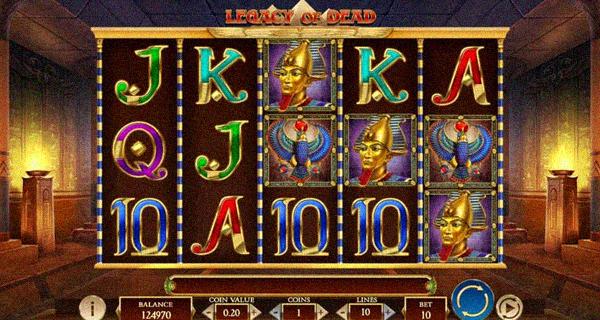
The original blueprint for Legacy of Dead centered on simplicity and impact. The developers reduced the design to fundamentals: a 5×3 grid, ten paylines, and a sacred book acting as both wild and scatter. The visual shift stands out. They opted for a deeper, gloomier scheme of deep blues and golds, positioning the reels inside a shadowy tomb chamber. This was a world away from the more luminous, wide horizons of Book of Dead. The sound design intensified the mood, exchanging adventurous tunes for haunting chants and echoes. They added the core gamble feature, a hallmark of Play’n GO’s high-volatility games, enabling players risk wins to double or quadruple them. The maths model received careful focus. It launched with that signature high volatility and a 96.21% RTP, a clear signal to seasoned UK players that this game meant business for big wins. Every design decision felt purposeful, sharpening a proven template.
Essential Thematic and Mechanical Differences from Book of Dead
Genetic similarities notwithstanding, several key differences developed here. The most visible was the cast. Rich Wilde left, and Anubis, Osiris, and Horus came in as the high-value symbols. This changed the player’s role from sidekick to someone dealing directly with deities. The expanding symbol in the free spins round grew even more crucial. Landing three god symbols could cover the screen with a single, high-paying image. I observed another subtle but effective tweak in the animations. The gods were depicted with finer detail and a sense of majesty. Their animations on a win appeared more substantial, more significant. These were not just symbols; they were the pillars of the game’s story. This groundwork guaranteed Legacy of Dead was seen as a worthy and ambitious sibling, not a cheap knock-off, carving its own niche within a familiar framework.
Technical Architecture and Tech Development
Beneath its thematic exterior, Legacy of Dead was built upon Play’n GO’s solid technical foundation. The game was built from scratch using HTML5. This ensured seamless operation on every device, a requirement for the UK market where mobile play is paramount. The optimization impressed me. Animations, especially the gods growing during free spins, remained smooth and vivid even on older smartphones, a sign of optimized programming. The sound design utilized a layered system that reacted to the action, building tension during spins and the gamble feature. It also plugged into Play’n GO’s back-end systems for features like in-depth session records and responsible gambling tools, which are crucial for UK compliance. This technical strength meant the game was not only appealing but also dependable, quick, and protected. It also prepared the slot for the future, facilitating smooth updates and integration into new platform features like tournaments, which would arrive later.
Graphics, Sound, and Immersive Elements
Legacy of Dead’s focus on immersion is where Play’n GO’s artistry shone. The graphics were more than just sharp; they constructed a consistent world. Every symbol resembled a engraved treasure. The tomb backdrop, with its subtle glow of torchlight, produced a sense of depth. The sound design is a exemplary slot audio in my view. It sidesteps irritating, repeating cycles. You get a haunting ambient track, supported by the clear noise of the reels, the resonant thud of a winning combination, and a dramatic swell when the free spins round activates. In the gamble feature, the music fades into a intense, thumping tempo, concentrating the player on the risk at hand. These sound and visual elements were not just decoration. They were fundamental to the experience, working together to uphold a mood of expectation and ancient mystery that kept UK players spinning.
Cultural Impact and Player Community in the UK
Legacy of Dead’s cultural influence in the UK online slot scene is real. It has become a benchmark, a game people regularly name alongside its predecessor when mentioning the best high-volatility slots. On community forums, in strategy discussions, and on casino review sites, it keeps a high profile. I often see it suggested as a logical next try for players who liked Book of Dead but want a change of tone. Its imagery, especially the stoic visages of Anubis and Horus, has grown recognizable on its own terms. The game has also spawned a huge amount of community content. Streamers regularly feature it, and dedicated videos dissect its mechanics. This natural, player-led promotion is the definitive sign of a game’s impact. It transcended being just another casino product and became a permanent fixture of the UK player’s lexicon. That shows how perfectly its original design and consistent quality met what the market wanted.
Initial Release and UK Market Reception
Legacy of Dead officially hit the market in October 2019. Its arrival in the UK generated significant attention from players and casino operators. I think back on the chatter in forums. Everyone speculated if it could sidestep turning into just another clone. The reaction, from what I saw, was largely positive. UK players, who appreciate both production quality and genuine win potential, took to it quickly. The familiar mechanics felt comfortable, while the fresh, mysterious atmosphere offered something distinct. It hit a perfect middle ground. Importantly, it was released on a wide array of reputable UK-licensed casinos, thanks to Play’n GO’s strong industry ties. The game’s performance metrics were solid, showing high engagement and good feedback on its immersive quality. It did not dethrone Book of Dead, and it was never meant to. Instead, it carved out its own space, offering players an alternative with the same thrill but a darker, more solemn narrative. This successful market fit was the first big evidence that Play’n GO’s development plan worked.
Post-Launch Updates and Functionality Expansions
After its launch, Legacy of Dead did not stay idle. Play’n GO rolled out a series of tactical updates that widened its reach. A significant step was incorporating the game to Play’n GO’s “Tournament” feature, where players from different casinos vie on leaderboards for prizes. This injected a interactive, competitive layer into the solitary tomb exploration. The game was also integrated into the “Bonus Buy” feature for markets where regulations enable it. This continues restricted for UKGC-licensed operators under current rules. For other regions, it enabled players purchase direct entry to the free spins round, accommodating those who sought immediate access to the game’s most unpredictable and exciting phase. The core gameplay kept the same, but these integrations demonstrated Play’n GO’s strategy of keeping its existing titles active and visible in their larger ecosystem. It made sure Legacy of Dead kept popping up in promotions and new casino lobbies long after its debut.
Heritage and Influence on Later Slots
The legacy of Legacy of Dead is apparent in the slots that came after. It proved that a sequel or spiritual successor could prosper by respecting core mechanics while fully overhauling the aesthetic and story. You can see this influence in Play’n GO’s own later releases, like “Scroll of Dead,” which persisted examining the ancient manuscript idea. More generally, it recalled the entire industry how much audiovisual polish and thematic consistency count in a crowded field. For UK players, it elevated the bar for production values. A slot could not just work properly; it had to pull you in. Its success also established the “Book” mechanic as a permanent favourite, urging other developers to explore new things within that structure. Observing today’s market, I can spot its DNA in many high-volatility, theme-heavy slots. Legacy of Dead represents a turning point in Play’n GO’s library. It honed a winning formula to a fine edge and demonstrated that even in a saturated genre like Egyptian adventure, there was still opportunity for fresh ideas and a strong identity.
The Present State and Path Ahead
Currently, in 2024, Legacy of Dead enjoys status as a contemporary classic in UK online casinos. Its RTP remains steady at 96.21%, and top providers still provide it top billing. While UK rules have blocked features like “Bonus Buy,” the game’s original form maintains a large fanbase. Its prospects seem solid. Play’n GO has a history of maintaining and marketing its hit titles for the long term, often incorporating them into new platform-wide features and campaigns. I expect it will remain a cornerstone of their collection. We might see visual updates later to maintain its appeal, though its fundamental design feels enduring. It works perfectly as a first step for new players exploring high-volatility games, and as a reliable option for experts. As the online slot world moves toward more elaborate themes and features, the sleek, streamlined design of Legacy of Dead guarantees its position as a durable and admired title. For the UK audience and others, it has built a true legacy.